

America loves a good historical story involving a strong, charismatic, and dedicated lawman who stood up for the people and the law. That’s why there are so many stories and movies based on law enforcers like Wyatt Earp; famous stories that make up our mythology. What if I told you there was a lawman in North Carolina who was clever, dedicated, and driven, but there have been people trying to erase him from the American story because of who he was, when he served, and how he died? Wyatt Outlaw was the son of a White merchant father and a possibly Enslaved mother, served in the Union Army, was an elected official for the town of Graham, and was a leader who crossed the color line to get both Black and White working men to come together for the protection and betterment of their home. Instead of being seen as a hero, this Black man was considered a danger and would be lynched by the KKK. His death, along with others, would lead to the Kirk-Holden War during the Reconstruction Period in North Carolina. Many North Carolinians and Americans do not know this Badass Lawman by name because who he was was a direct attack on the ideals of White Supremacy.
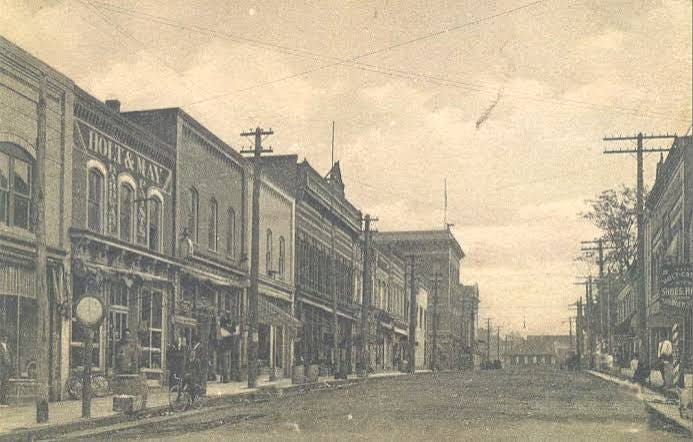
Wyatt Outlaw was born in Alamance County, North Carolina, in 1820. There is some question about whether Jemimah Phillips, his mother, was enslaved or not; there are some arguments that she was freed by Outlaw’s father or by someone else, or she might even have been born free. Accounts are unclear. What we do know is that Outlaw’s white father was likely Chesley Faucett, a merchant. There are several conflicting accounts of whether Outlaw was free or born enslaved before the war, but all sides agree that Outlaw became a skilled carpenter. When the South rose up against the United States, according to some accounts, Outlaw was forced into a labor camp near Petersburg, VA, making earthen works for the Confederate defense. However, Outlaw escaped the camp. When the Union finally began organizing Colored troops, Outlaw sought to enlist in the 2nd Regiment United States Colored Cavalry. The unit was involved in the Battle of Drewry’s Bluff, the Battle of Baylor’s Farm, the Second Battle of Deep Bottom, the Battle of Chaffin’s Farm, and the Siege of Richmond. It is important to note that Colored troops were treated poorly and often not considered for awards during the conflict. In spite of this, Outlaw proved himself loyal and brave.
Outlaw returned to a very different North Carolina. On May 29, 1865, President Andrew Johnson appointed William Woods Holden to be the Governor of North Carolina and to oversee its readmission to the Union. Little did Outlaw know what an outsized role Governor Holden would play in his life. Outlaw took the Union cause to heart and became very politically active in Alamance County. He would become a leader during the 1866 Freedman’s Convention. He was also known for crossing the color line to organize and rally both White and Black Republican voters to serve their community. Outlaw was appointed as Graham’s town commissioner in 1868 by Governor Holden and would later be elected to that position by the people of Graham.
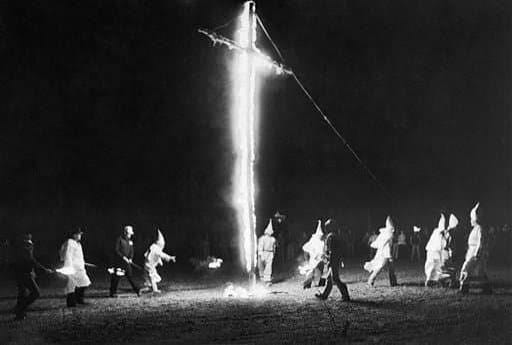
In the aftermath of the Civil War, many of the landed gentry of the South did not appreciate the racial upheaval caused by the freeing and enfranchisement given to the formerly enslaved. “The Southern Way of Life,” as they saw it, was being threatened. These men, most of whom were either Confederate supporters, if not former Confederate soldiers, banded together to use force and intimidation to try to reverse the progress made by the end of the war. An organization was emerging all over the South thanks to the words and actions of men like Nathan Bedford Forrest; the Ku Klux Klan was a homegrown terrorist group that was determined to keep the societal order in place. They would use violence against those helping the newly emancipated, those who voted Republican, or those who sought to establish the newly recognized Black citizen. The organized war may have ended, but it was clear that hearts and minds had not been changed; they were now operating outside of governments.
In reaction to growing Klan violence in the region, in 1869, Wyatt Outlaw was selected by the mayor of Graham to be part of a group of Black and White men to be armed defenders, constables, in the region. Tensions were rising, and everyone feared that a war might break out from the intersectional violence brewing during Reconstruction. When the Klan came to Graham, they were met with an armed response from Outlaw and two other Black constables. The Klan, outraged to be met with an armed defense of the people of Graham, decided that an example had to be made of these men.
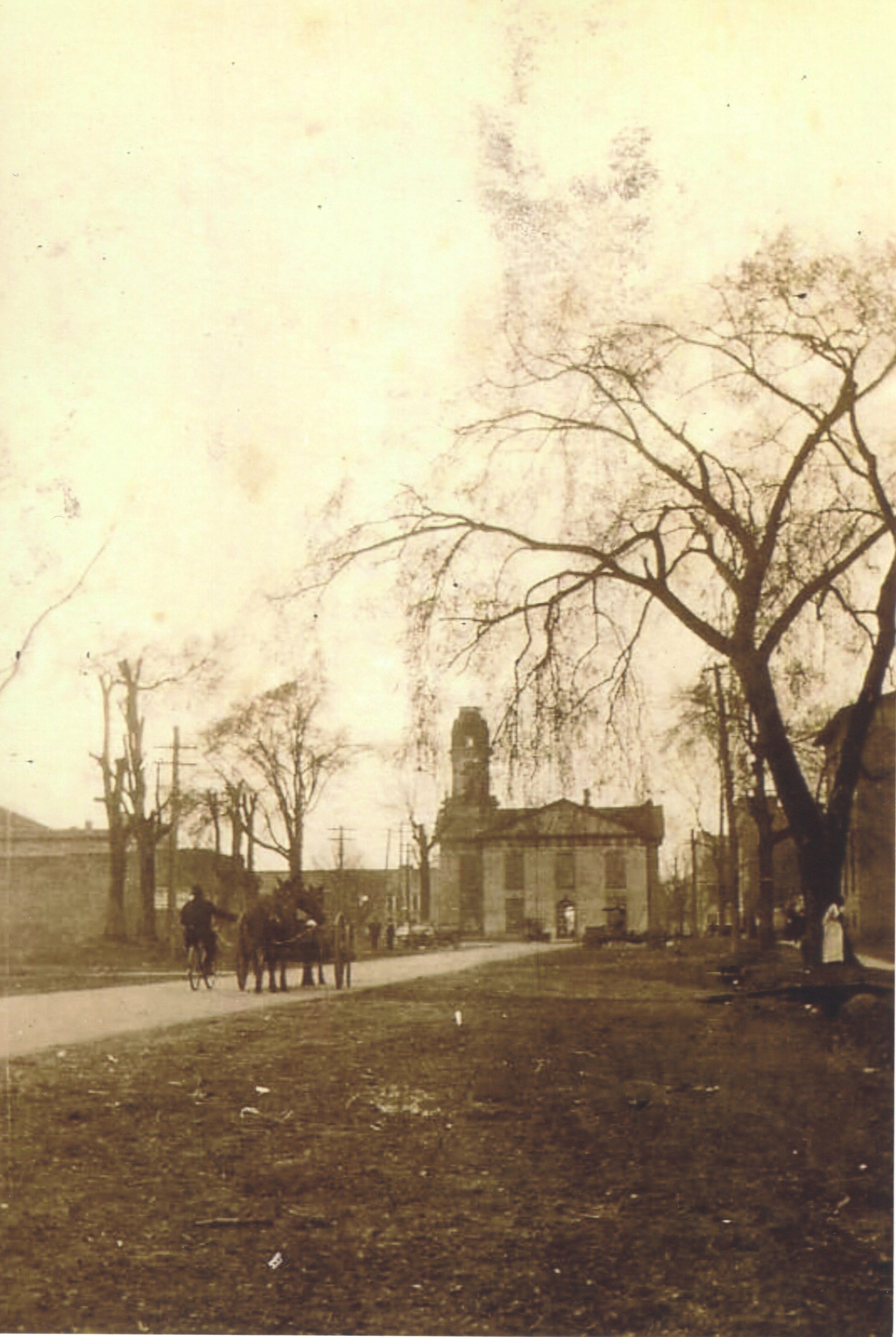
On the night of February 26, 1870, approximately sixty Klansmen armed with swords, pistols, and torches invaded Outlaw’s home, terrorizing and threatening his family. They swept Outlaw out of his home. The Klan took him to the Alamance Courthouse, where they lynched the Union veteran, Republican political leader, town commissioner, and constable. They then pinned a sign to him that read, “Beware, you guilty, both white and black.” This murder, along with the murder of a State Senator, John W. Stephens, in the Piedmont region of North Carolina, would lead to Holden enlisting the help of Union General George W. Kirk. Thus, the Kirk-Holden War had begun.
As a prelude to the start of the Kirk-Holden War, the Shoffner Act was passed, allowing Governor Holden to declare the North Carolina counties of Alamance and Caswell to be in a state of insurrection to suspend habeas corpus. This allowed General Kirk, along with his troops, primarily from Eastern Tennessee and Western North Carolina, to arrest approximately a hundred suspected Klansmen without warrant. Among those arrested were sheriffs and a former United States Congressman. The men who were arrested became outraged and sought help from the Federal Government in cases of suspected state government overreach. This act would cause the impeachment and removal of Governor Holden and bring the Democrats back into power in North Carolina. The Democrats of North Carolina went to work repealing the Shoffner Act and granting amnesty in 1873 for the Klan’s crimes in the region before September 1871.
In 1872, eighteen men were indicted in the murder of Outlaw, but they never faced trial. Klansmen would continue to be venerated as heroes in North Carolina until recent times, when statues were finally torn down and names were removed from buildings.
Wyatt Outlaw deserves to be remembered for his bravery, dedication, and his willingness to defend the law in the face of powerful, aggressive forces. The Klan would later admit that they targeted Outlaw because of his political strength and his ability as a leader of both races. It is clear they feared him and what he represented for North Carolina’s future. He was meant to serve as an example, a warning to any Black person who decided to stand up for themselves and their people. He is a North Carolinian worth remembering and celebrating. He may have died, but he died a hero and should be remembered as such.
Sources:
Battle Unit Details - The Civil War (U.S. National Park Service). https://www.nps.gov/subjects/civilwar/search-battle-units-detail.htm. Accessed 9 Aug. 2026.
Battle Unit Details - The Civil War (U.S. National Park Service). https://www.nps.gov/subjects/civilwar/search-battle-units-detail.htm. Accessed 13 Aug. 2026.
Brisson, Jim D. THE KIRK-HOLDEN WAR OF 1870 AND THE FAILURE OF RECONSTRUCTION IN NORTH CAROLINA.
“Feb. 26, 1870: Wyatt Outlaw Murdered.” Zinn Education Project, https://www.zinnedproject.org/news/tdih/wyatt-outlaw-murdered/. Accessed 9 Aug. 2026.
“Feb. 26, 1870: Wyatt Outlaw Murdered.” Zinn Education Project, https://www.zinnedproject.org/news/tdih/wyatt-outlaw-murdered/. Accessed 13 Aug. 2026.
Government, Heritage Library, and June 2023. Holden, William Woods | NCpedia. https://www.ncpedia.org/biography/holden-william-woods. Accessed 13 Aug. 2026.
Government, Heritage Library, and March 2025. Vance, Zebulon Baird | NCpedia. https://www.ncpedia.org/biography/vance-zebulon-baird. Accessed 13 Aug. 2026.
Gubernatorial Succession Early in the Civil War | NC DNCR. https://www.dncr.nc.gov/blog/2016/07/07/gubernatorial-succession-early-civil-war. Accessed 13 Aug. 2026.
Harrison, Wade. “The Forgotten History of Wyatt Outlaw and Governor William W. Holden.” North Carolina State Bar Journal, vol. 28, 2023, p. 20.
“Lynching of Wyatt Outlaw & the ‘Kirk-Holden War.’” American Battlefield Trust, https://www.battlefields.org/visit/heritage-sites/lynching-wyatt-outlaw-kirk-holden-war. Accessed 9 Aug. 2026.
“Lynching of Wyatt Outlaw & the ‘Kirk-Holden War.’” American Battlefield Trust, https://www.battlefields.org/visit/heritage-sites/lynching-wyatt-outlaw-kirk-holden-war. Accessed 13 Aug. 2026.
Lynching of Wyatt Outlaw and the Kirk-Holden War | NC DNCR. 26 Feb. 2016, https://www.dncr.nc.gov/blog/2016/02/26/lynching-wyatt-outlaw-and-kirk-holden-war.
Lynching of Wyatt Outlaw and the Kirk-Holden War | NC DNCR. 26 Feb. 2016, https://www.dncr.nc.gov/blog/2016/02/26/lynching-wyatt-outlaw-and-kirk-holden-war.
Richmond, Mailing Address: 3215 E. Broad Street, and VA 23223 Phone: 804-226-1981 Contact Us. United States Colored Troops 2nd Regiment Cavalry - Richmond National Battlefield Park (U.S. National Park Service). https://www.nps.gov/rich/learn/historyculture/2nduscc.htm. Accessed 9 Aug. 2026.
The Kirk-Holden War | ANCHOR. https://www.ncanchor.org/anchor/kirk-holden-war. Accessed 13 Aug. 2026.
The Kirk-Holden War of 1870. https://docsouth.unc.edu/highlights/. Accessed 13 Aug. 2026.
The Life and Tragic Death of Wyatt Outlaw | News | Thetimesnews.Com. https://www.thetimesnews.com/news/the-life-and-tragic-death-of-wyatt-outlaw/article_376194cf-37d4-5cab-a7a9-71f2cc54cd3a.html. Accessed 13 Aug. 2026.
Timeline of Reconstruction in North Carolina | ANCHOR. https://www.ncanchor.org/anchor/timeline-reconstruction. Accessed 13 Aug. 2026.
“To Look More Closely at the Man”: Wyatt Outlaw, a Nexus of National, Local, and Personal History | JSTOR. https://www.jstor.org/stable/23522167?googleloggedin=true&seq=1. Accessed 9 Aug. 2026.